Northwestern Qatar Research and Creative Scholarship Newsletter
Spring 2026
This latest research newsletter reflects that we at Northwestern University in Qatar are a serious community of scholars contributing original insights into numerous conversations. Asking questions, seeking answers by collecting observations, words, images, sounds, data points, then articulating them in compelling narratives is the time-tested ritual of evidence-based storytelling at its best. How marvelous it is that we get to understand our world more deeply, that we get to comprehend the human experience more accurately, and that we get to share what we learn with multiple publics: first our beloved students, second our expert colleagues, and third the societies that we serve: original knowledge creation is the heart of the academic trilogy of research, teaching, and service.
Marwan M. Kraidy
Dean and CEO
Northwestern Qatar
This year’s Research and Creative Scholarship Newsletter evidences another excellent year of faculty scholarship at NU-Q. From the period May 1, 2025, to April 30, 2026, faculty have produced eight books, five films, a podcast series, thirty-eight peer-reviewed journal articles, thirty-two scholarly book chapters, and a wide range of journalism pieces and other forms of public scholarship. They have also won prestigious awards, with highlights including a Sundance Film Festival “Special Jury Award in Journalistic Excellence” for William Youmans’s “Who Killed Alex Odeh?; an Emmy Award nomination for the film Bodyguard of Lies, on which Shakeeb Asrar served as Associate Producer; and a “True Story Award” shortlist nomination for Lila Hassan at the True Story Festival. Faculty have also presented at more than 100 international conferences and invited lectures or film screenings, including prestigious scholarly gatherings such as the International Communication Association, the Association for Education in Journalism and Mass Communication, the International Media Management Academic Association, the Middle East Studies Association, and the African Studies Association. Faculty Affairs thanks the NU-Q Library for their assistance in compiling and verifying citations, as well as the Communication and Public Affairs department for assistance in publication.
Zachary Wright
Associate Dean for Faculty Affairs
William Youmans
Associate Professor in Residence
William Lafi Youmans is a visiting associate professor in residence at Northwestern University in Qatar. He is broadly interested in questions of transnationalism, power and communication, with his primary research interests focusing on global news, media industries, technology, law, and politics. His other areas of research interest include media law, Middle East politics, and Arab American studies.
As #IAS_NUQ approaches its fifth anniversary, we are firmly established as a leading global research institute with vibrant fellowship, event, and publication programs; impactful partnerships and collaborations; and transformative faculty support opportunities.
In the past year, we made significant strides in building #IAS_NUQ Press. Key developments include the hiring of Azka Anwar as Publications Manager; the release of a special issue on InterAsian Digitalities with a peer-reviewed journal; securing a contract for an edited volume on Southern Digitalities with University of Illinois Press, and the publication of five papers by IAS Undergraduate Fellows.
In 2025-26, we welcomed three Global Fellows (with a fourth postponed to AY 2026-27). Mostafa Minawi (Cornell University), Sara Mourad (American University of Beirut), and Asri Saraswati (University of Indonesia) each spent two to four months in residence at NU-Q developing contracted book projects, presenting colloquia to the Education City community, and participating in the #IAS_NUQ writing group and other Institute initiatives.
In August 2025, Angela Haddad joined the Institute from New York University as our fourth Postdoctoral Scholar, joining Mariam Karim, Chafic Najem, and Harsha Maharjan (2023–2026). Their research spans transregional literary connections between the Arab world and Caribbean (Haddad), Arab feminism (Karim), digital media in carceral spaces in Lebanon (Najem), and biometric citizenship in Nepal (Maharjan). Our postdoctoral scholars have been exceptionally productive, publishing widely in internationally recognized peer-reviewed journals (see faculty scholarship highlights for details).
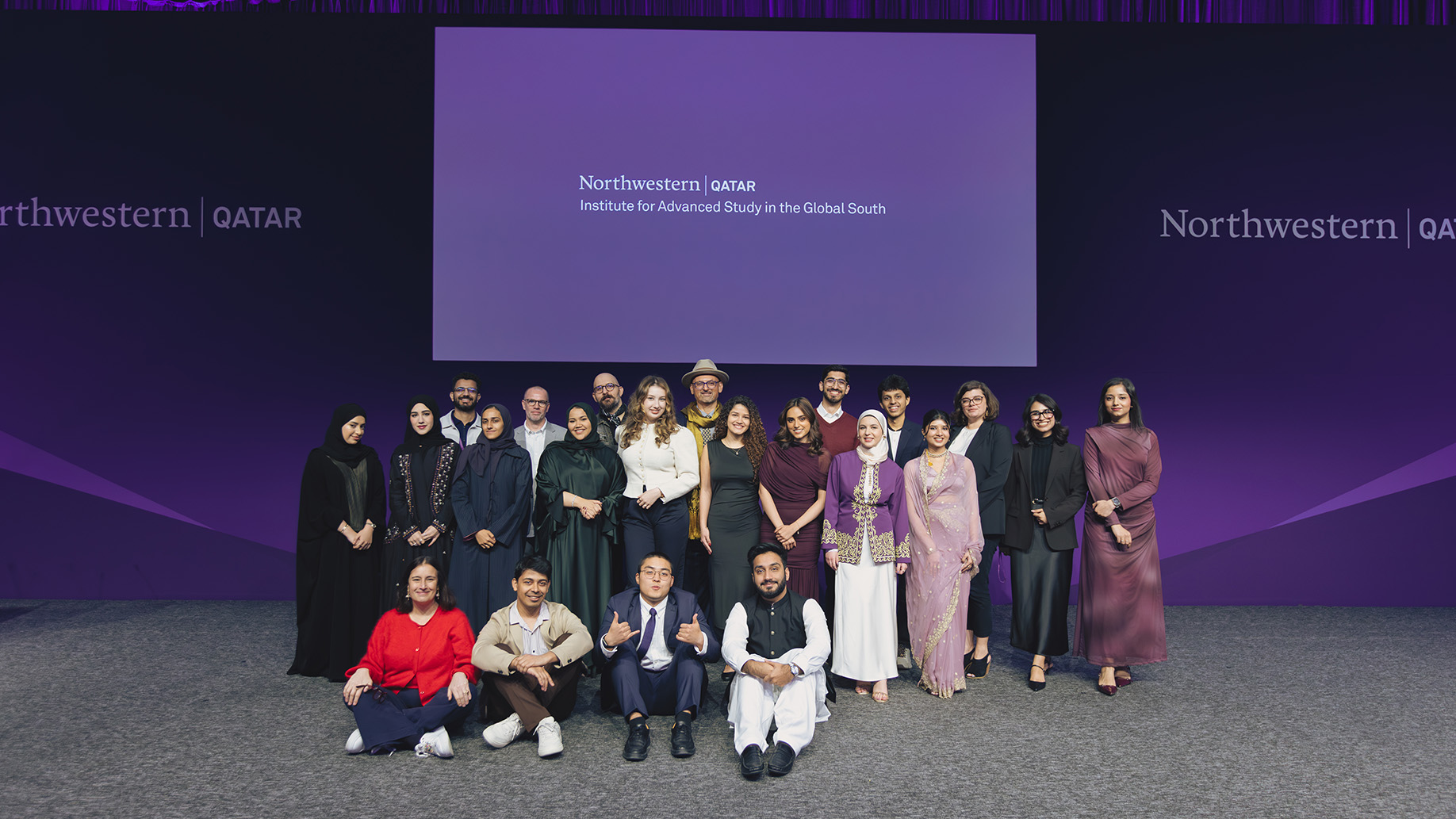
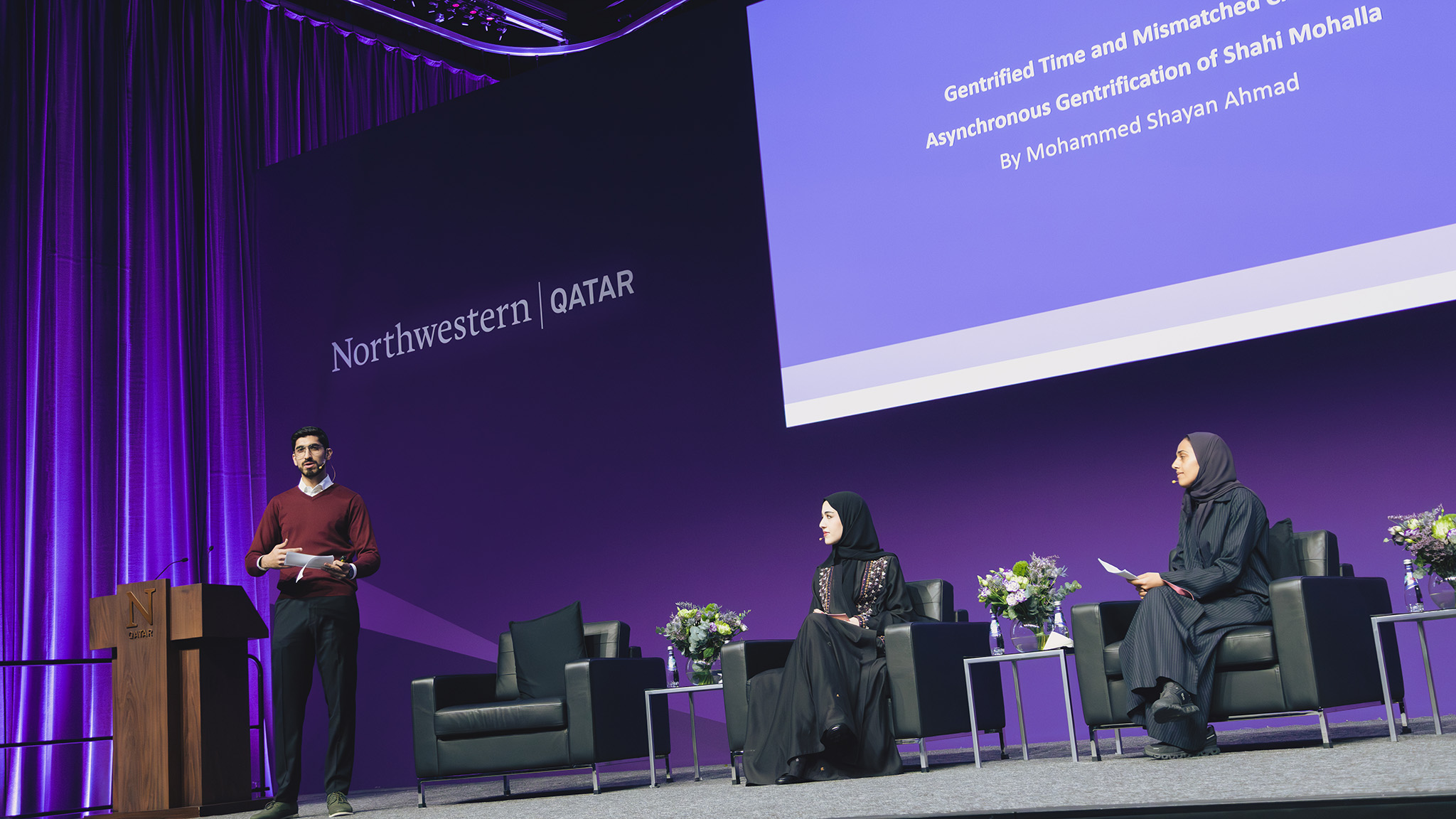
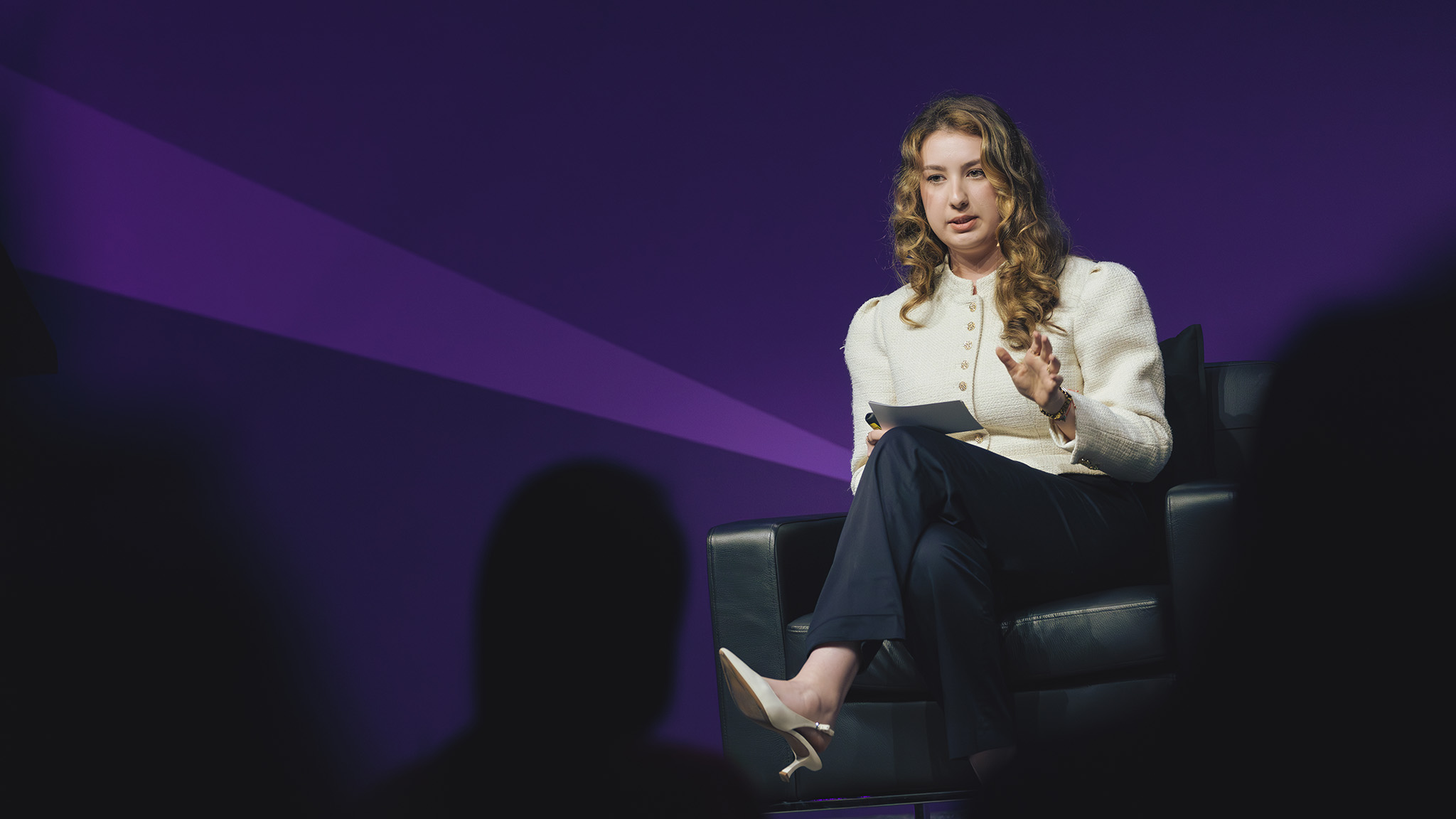
IAS_NUQ Global Undergraduate Fellows continue to produce significant original research projects on the on the histories, cultures, societies, and media of the Global South. In January, the 2025 fellows showcased their work at a major community celebration featuring three research papers, six multimodal projects, and six short documentaries. Since then, their projects have been accepted and presented at major international conferences and festivals, including IAMCR, ASA, EU Youth Short Film Festival, Middle MESA, and Global South Lens Film Festival.
The 2026 cohort began work in January, addressing critical topics such as digital protest cultures in Nepal; church-state-diaspora relations in Armenia; the effects of political incarceration on families in the West Bank; and the preservation of minority languages and identities across Mongolia, China, and Central Asia. We were also delighted that In’utu Imbuwa, 2023 #IAS_NUQ Undergraduate Fellow and author of #IAS_NUQ_Press Paper 1, was named a 2026 Rhodes scholar.
In summer and fall of 2025, #IAS_NUQ continued to expand its global reach with a major presence at several top academic conferences, including ACSS (Beirut), ICA (Denver), IAMCR (Singapore), and MESA (Washington DC). At ACSS, we officially launched the Society for Humanistic Arab Media Studies (SHAMS), dedicated to advancing rigorous, multidisciplinary, and humanistic research on Arab media within social, cultural, and political-economic contexts and conducted a publication workshop on InterAsian Digitalities.
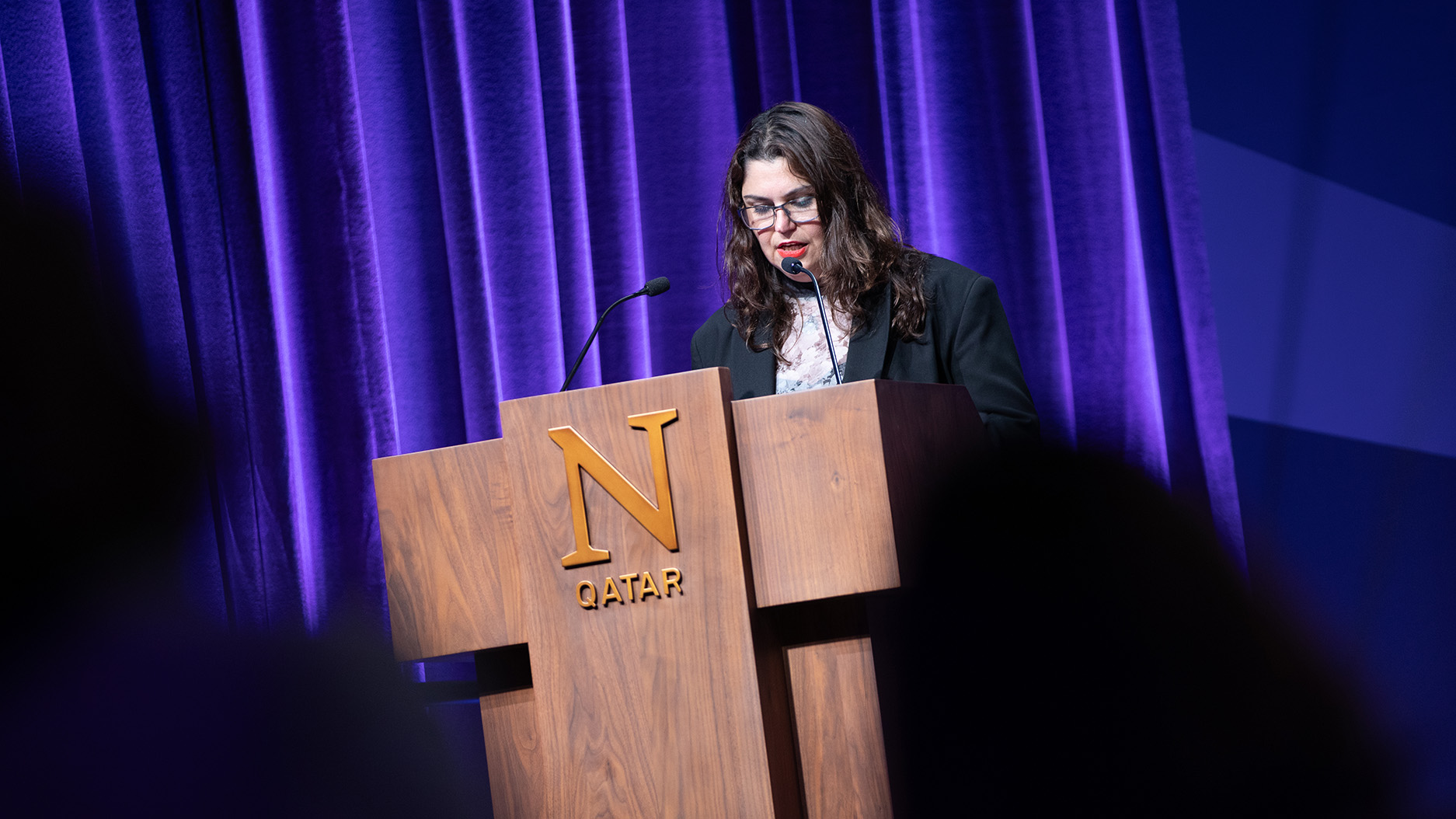
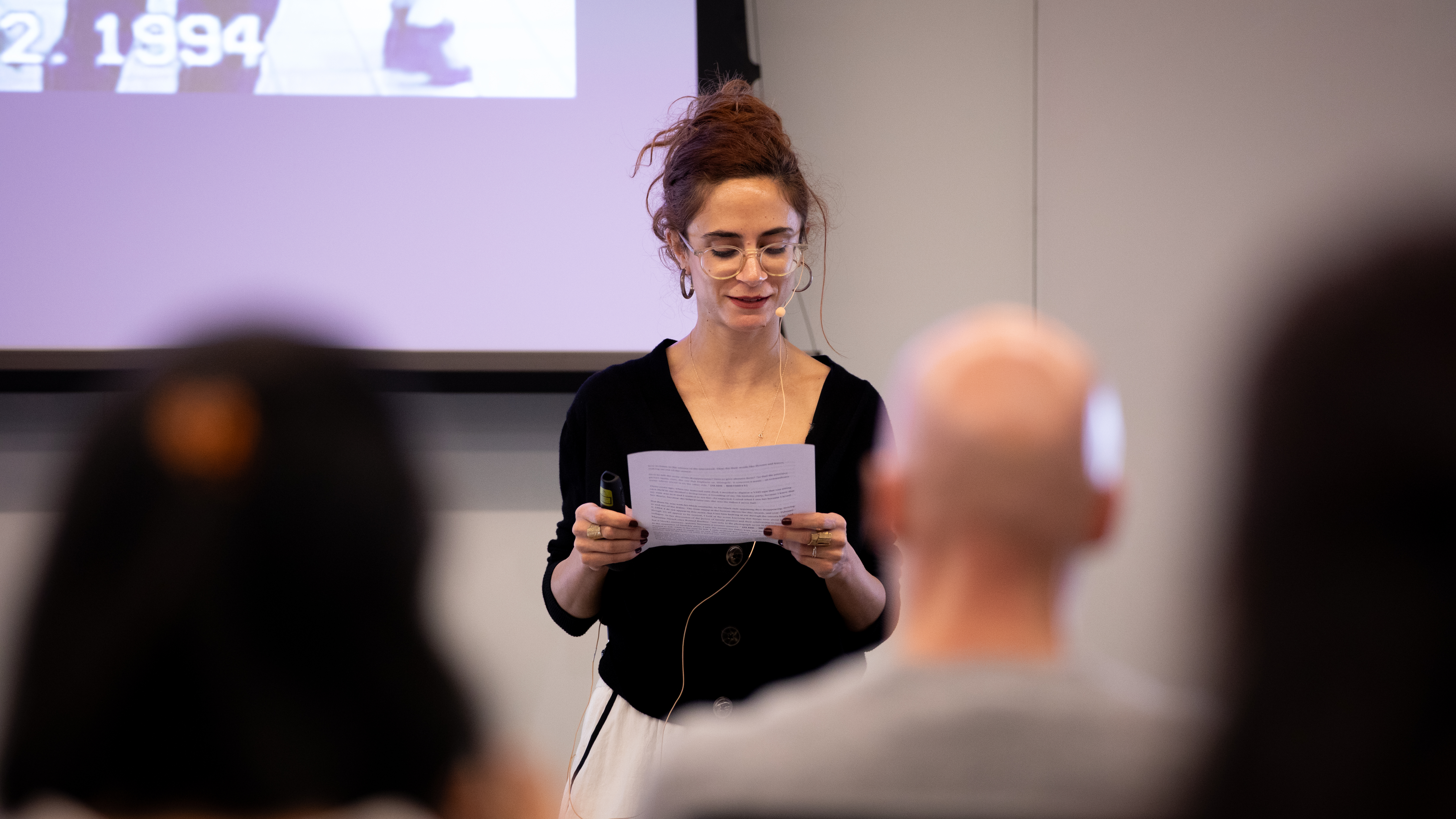
At ICA in Denver, we hosted “Echoes and Overlaps in Arab and African Thought on Media and Culture ,” a one-day preconference exploring shared epistemologies, divergences, and entangled histories of Arab and African thought on media and culture, along with a roundtable on InterAsian Digitalities. At IAMCR in Singapore, we hosted a preconference titled “ InterAsian Digitalities: Rethinking Theories and Methods,” while showcasing the work of #IAS_NUQ researchers, postdoctoral scholars, and undergraduate fellows. Our delegation included recent alumni Annastazia Ng’ambi and Mahnoor Ahmer Ansari, who presented research on journalism in Zambia and gendered time practices on TikTok in Pakistan, respectively.
#IAS_NUQ also organized the first SHAMS meeting in conjunction with MESA in November, including a roundtable featuring established and emerging scholars reflecting on humanistic methodologies in Arab media studies.
Our fall public events program featured four colloquia highlighting research by IAS Postdoctoral Scholars and Global Fellows. We also hosted a conference on Key Moments in Media and Culture, the culmination of three years of work by the Humanistic Inquiry and Theory Group at NU-Q. Additional programming included two panels:“Digital Public History in a Global Context,” co-organized with the Luxembourg Centre for Contemporary and Digital History (C2DH), and“Everyday Technologies: Media in Middle East History,” hosted with the Journalism and Strategic Communication program as part of an #IAS_NUQ Global Conference and Workshop Grant awarded to William Youmans.
In November, we hosted Andrea Medrado (University of Exeter) for the third annual NU-Q Lecture on the Global South. Medrado delivered a public lecture,“Favel IA: South-to-South Dialogues on Digital Colonialism, Participation and Justice,” and led a workshop on Critical AI and the Global South with IAS postdoctoral scholars and NU-Q faculty. The visit also included a mentoring lunch with undergraduate fellows and a vodcast conversation with NU-Q Dean and CEO Marwan M. Kraidy.

Our Arab Information and Media Studies (AIMS) project, funded by Carnegie Corporation of New York, was active with the launch of SHAMS and our fourth Theory and Method Winter School in January. This year’s theme,“Media Policy and Governance,” introduced graduate students and early career scholars from diverse institutions to courses on media policy analysis, Arab media systems and governance, and policy brief writing. Participants are currently refining policy briefs, which will be published by #IAS_NUQ_Press.
Our partnership with the Arab Council for Social Sciences (ACSS) continues to support programming in Critical Security Studies, including monthly brown bags convening scholars from around Qatar and co-sponsored talks with the Center for International and Regional Studies (CIRS) at Georgetown University in Qatar.
Our partnership with the Luxembourg Centre for Contemporary and Digital History (C2DH) has expanded to include workshops for IAS fellows on digital and public history, participation in symposia hosted by University of Luxembourg MA students, and plans for a Public History in the Middle East workshop at Qatar National Library (QNL) next fall.
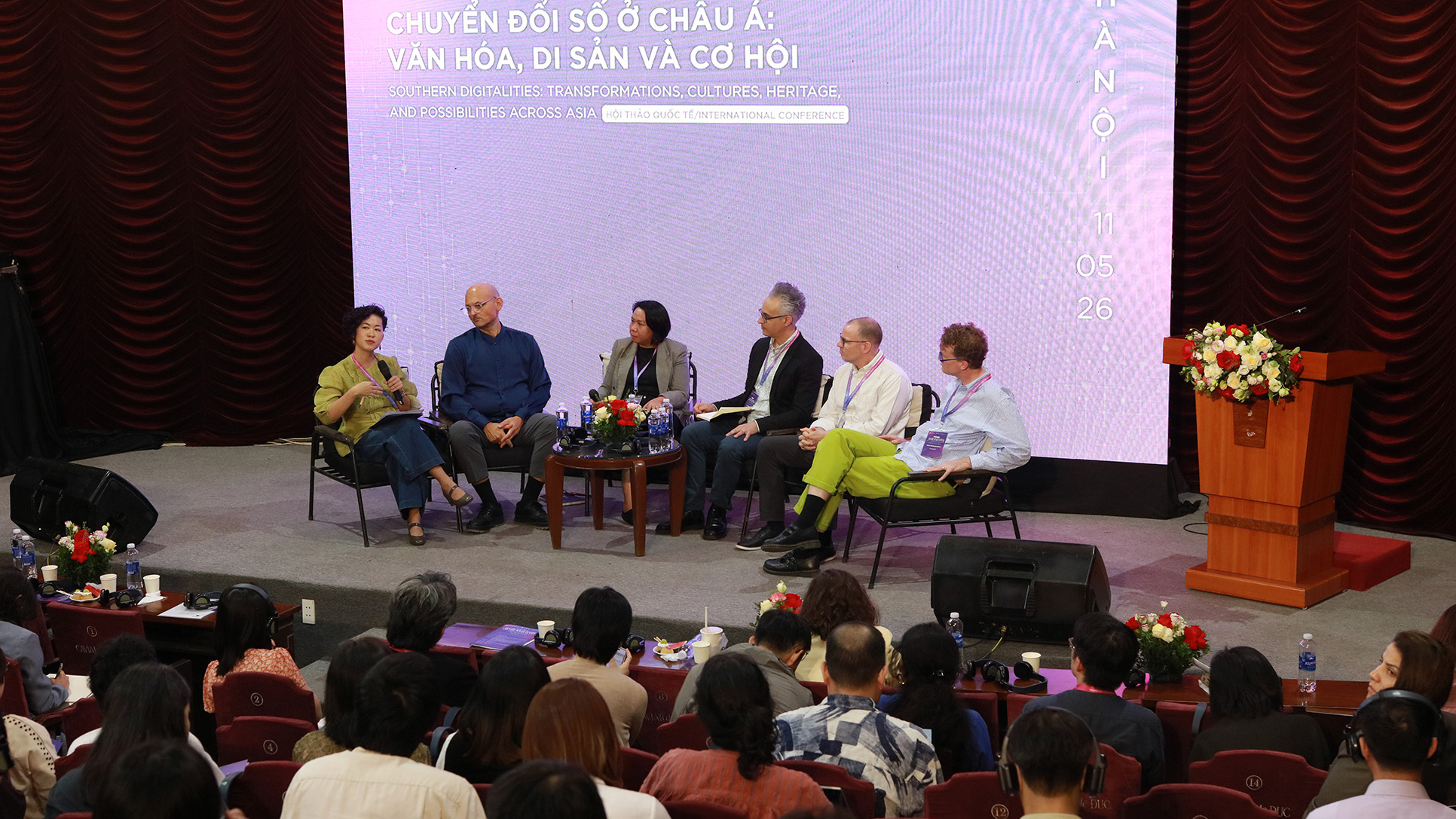
Through our InterAsia Partnership, we hosted a Summer School on Southern Digitalities, co-organized with the Center for Digital Cultures and Societies (University of Queensland) and the School of Interdisciplinary Sciences and Arts (Vietnam National University), in Hanoi, Vietnam, May 11–14.
This past year has been very significant for the Media Majlis Museum. The museum has sharpened its identity as something distinct from the traditional exhibition space, a place where media, art, communication, and technology don't just coexist but actively collide.
The Fall 2025 exhibition, Mememememememe, took on meme culture, positioning it as a serious force in how people communicate, organize, and argue. The exhibition used immersive and digital formats to unpack how memes have moved well beyond humor into the territory of activism, identity-making, and political persuasion. It asked visitors to consider what happens to authorship, expression, and public discourse when culture is built to be copied.
In Spring 2026, What's Between, Between? turned to Gulf Futurism, highlighting it as a contested space shaped by rapid urban transformation, speculative thinking, and the lived realities of a region in constant flux. The exhibition used contemporary art, media, and technology to push back against flattened readings of the Gulf's future and make room for multiple, sometimes contradictory, visions of what comes next. The exhibition launched alongside Art Basel Qatar and Web Summit Qatar week.
During the year, the museum produced two research-driven publications accompanying the respective exhibitions, which provided further insights and original content from a range of different authors and scholars.
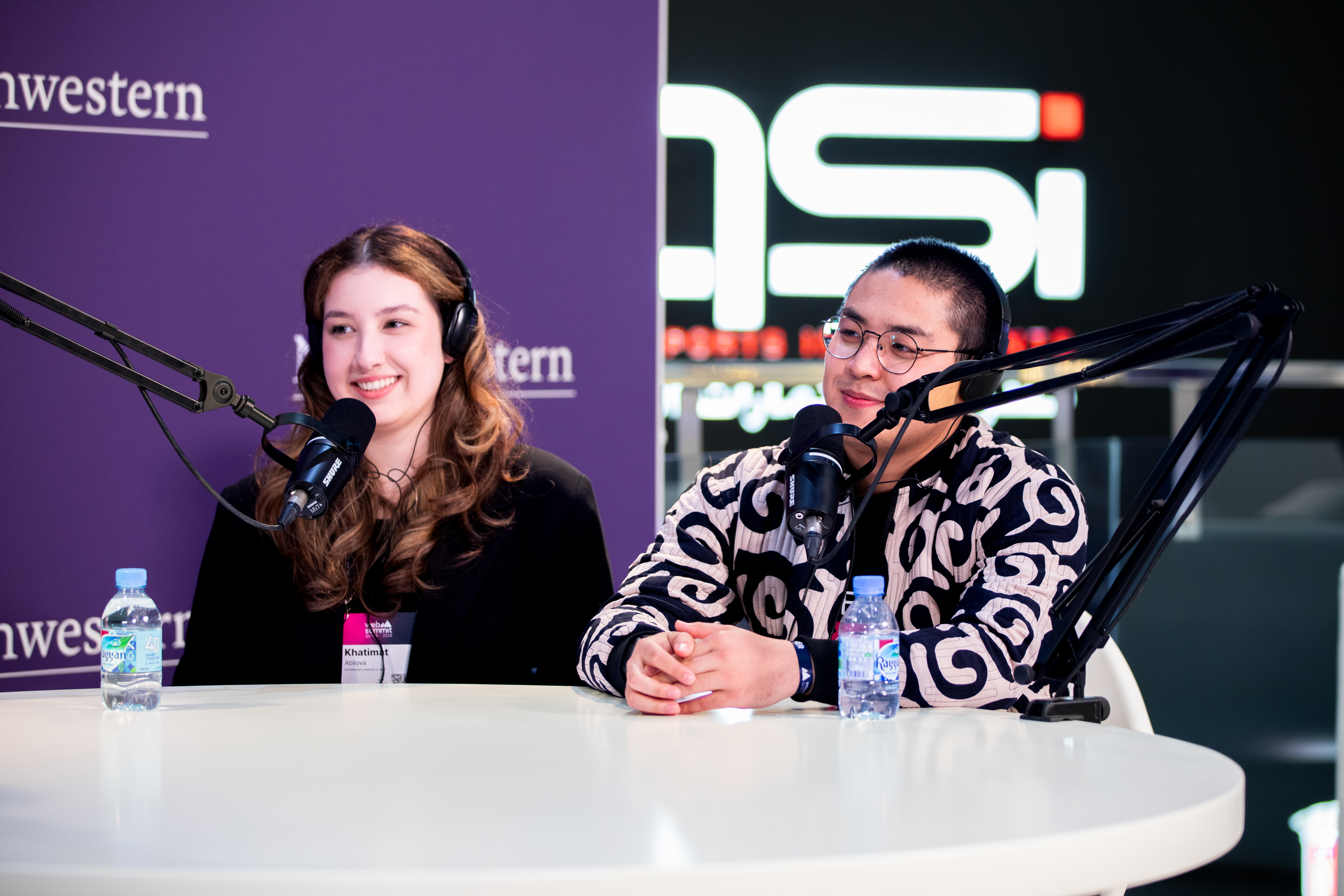
At Web Summit Qatar 2026, the museum stepped once more into the tech territory. Media Futures: Memes, Machines & New Realities was a three-zone interactive installation that translated curatorial research into something visitors could physically move through, exploring meme culture, artificial intelligence, and immersive storytelling in a format designed for a tech-facing audience. Live podcast sessions and talks at the NU-Q booth reinforced the museum's presence as a proactive participant in global media and technology conversations.
Across the year, the museum has grown its visibility, deepened its digital presence, and built strategic partnerships, all while staying anchored to what it does best: public engagement, academic integration, and cross-cultural exchange.
AIM-Lab Director, faculty affiliates, postdoctoral scholar, and the inaugural and second cohorts of 11 AURORA student grantees have conducted timely and relevant research on the intersection of AI and media and presented their R&D projects at various academic conferences including the ICA 2025, AEJMC 2025, Yale Undergraduate Conference 2026, and the International Conference on Intelligent User Interfaces 2026. AIM-Lab faculty and postdoctoral scholar published interdisciplinary and multidisciplinary research studies about AI-powered metaverses and cryptocurrencies, ChatGPT-powered virtual influencers, and automated classification of online discourse in impactful peer-reviewed journals. AIM-Lab organized the RAWABET Conference on AI (“Shaping the AI-Empowered Future of Knowledge, Scholarship, and Creativity”).
AIM-Lab faculty and AURORA students presented their R&D projects and engaged with prominent scholars and industry experts. Public engagement opportunities included a talk (“Rehumanizing Education in the Age of AI: Balancing Empathy, Ethics, and Innovation”) delivered by the AIM-Lab Director (Venus Jin),“AI-Powered Text Moderation: Building a Practical Python Pipeline” delivered by the AIM-Lab postdoctoral scholar (Zaid Almahmoud) in Arabic, and AIM-Lab faculty affiliates’ participation in numerous panel discussions and podcast episodes at the WISE 12 Summit and Web Summit Qatar 2026. AURORA students also showcased their AI development projects (Kalima AI: Adaptive AI Tutor for Integrated MSA and Dialect Arabic Learning and Eterna: Memory Capsule) at Web Summit Qatar 2026.