Kraidy and Connolly Explore the Humanities and the Public Good
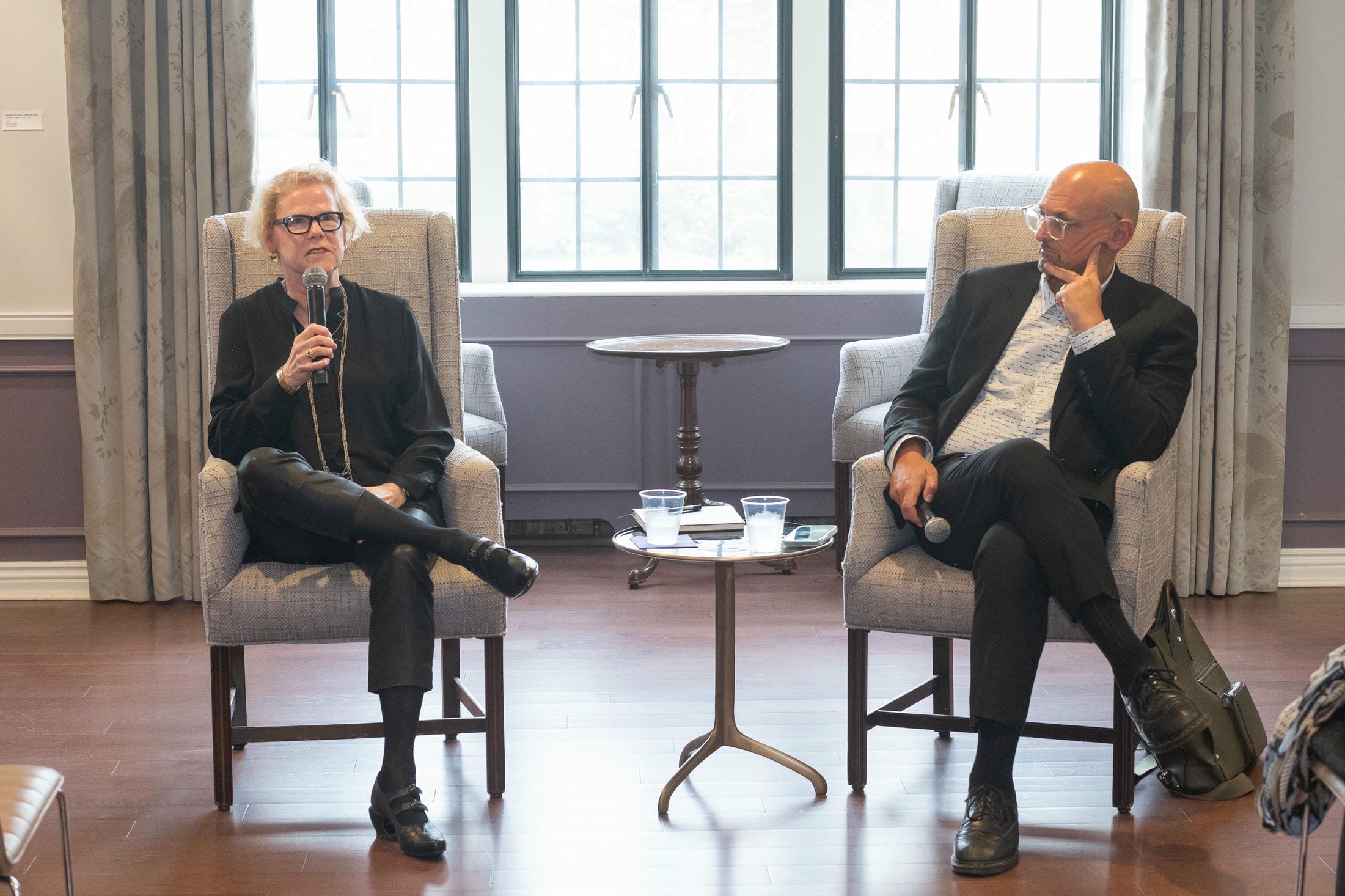
At a moment when societies are grappling with rapid technological change, political polarization, and growing questions about the role of higher education, two leading voices in the humanities gathered at Northwestern University to discuss why humanistic inquiry remains essential to public life.
Joy Connolly, president of the American Council of Learned Societies (ACLS), joined Marwan M. Kraidy, dean and CEO of Northwestern University in Qatar and chair of the ACLS Board of Directors, for "A Humanities for the Public Good," at the Alice Kaplan Institute for the Humanities on April 27.
The conversation brought together students, faculty, and members of the public to reflect on how the humanities can help societies navigate uncertainty, engage across differences, and imagine more inclusive futures.
Connolly argued that the humanities play a vital role in helping people understand the forces shaping their lives and communities.
"The humanities help us understand not only where we have come from, but also how we might live together in the future," said Connolly. "At a time of rapid technological, political, and social change, humanistic inquiry equips us to ask better questions, engage more thoughtfully with one another, and imagine possibilities that serve the public good."
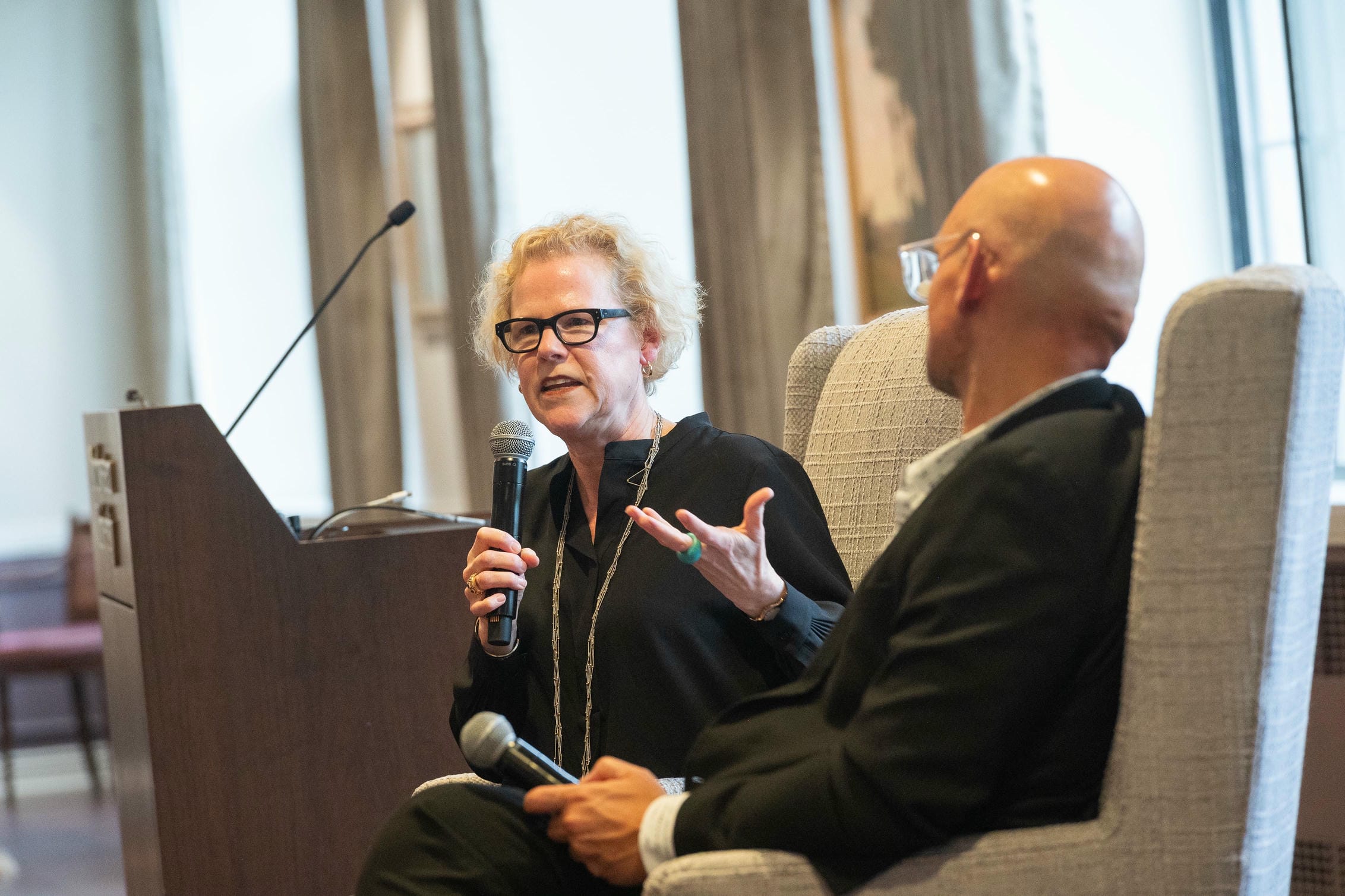
“The humanities help us understand not only where we have come from, but also how we might live together in the future. At a time of rapid technological, political, and social change, humanistic inquiry equips us to ask better questions, engage more thoughtfully with one another, and imagine possibilities that serve the public good.”
Throughout the discussion, Connolly reflected on the importance of ensuring that scholarship remains connected to public life. She emphasized that the humanities provide critical tools for understanding history, culture, and human experience, while helping citizens engage thoughtfully with complex social and civic challenges.
Kraidy, whose scholarship examines media, culture, and global communication, highlighted the role universities can play in connecting knowledge with society. He noted that while advances in technology continue to reshape the world, the need for interpretation, context, and dialogue remains fundamentally human.
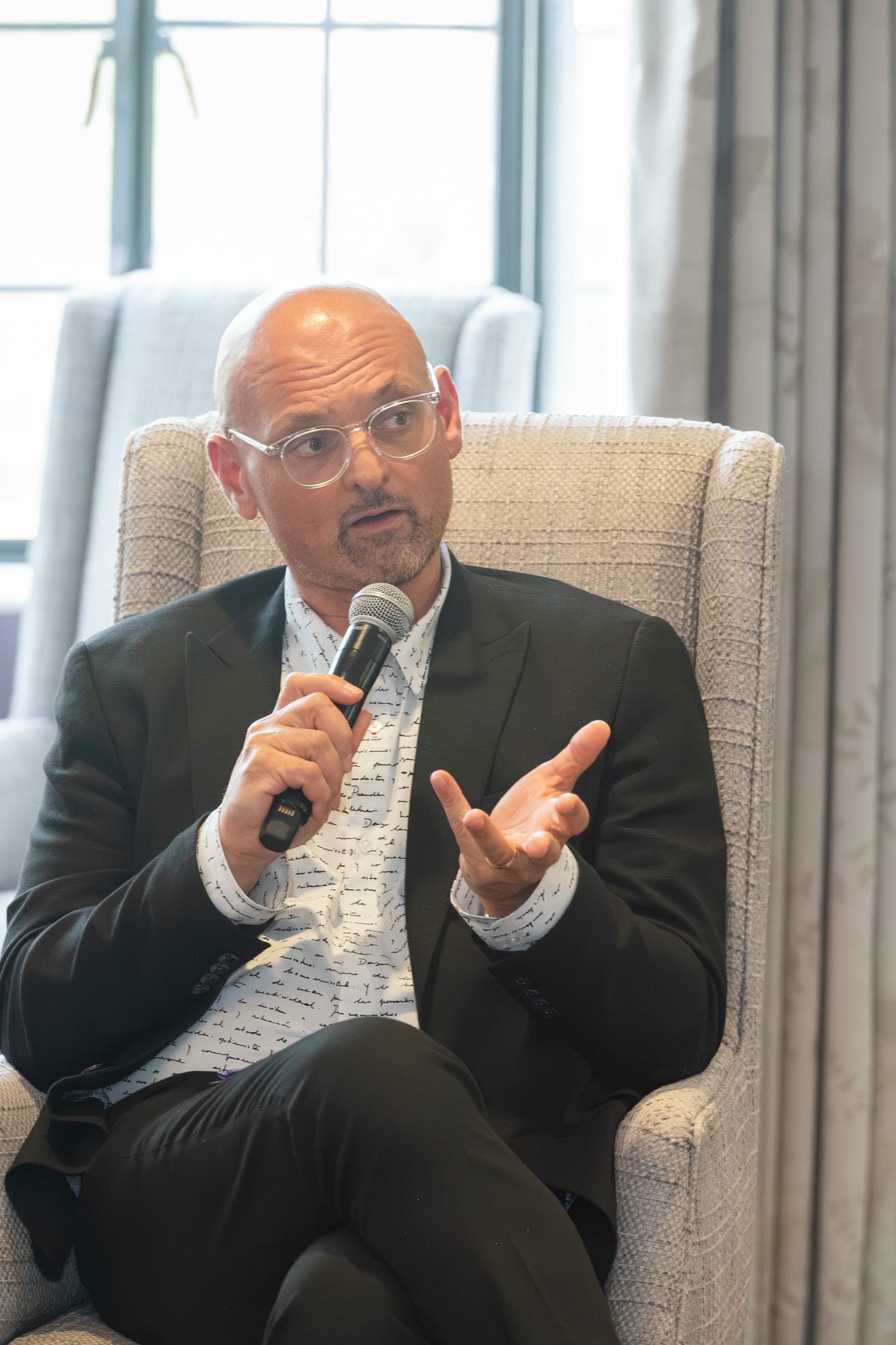
"The humanities remind us that facts alone are not enough," said Kraidy. "We need interpretation, context, imagination, and dialogue to understand the world and our place within it. Universities have a responsibility to bring these conversations into public life and ensure that knowledge serves society."
“The humanities remind us that facts alone are not enough. We need interpretation, context, imagination, and dialogue to understand the world and our place within it. Universities have a responsibility to bring these conversations into public life and ensure that knowledge serves society,”
A recurring theme of the conversation was the importance of expanding access to the humanities and ensuring that humanistic scholarship reaches audiences beyond the academy. Connolly and Kraidy discussed how universities can foster meaningful engagement between scholars and the broader public, particularly at a time when societies face increasingly complex questions related to technology, democracy, culture, and identity.
The speakers also reflected on the role of storytelling in helping people make sense of change. Drawing on NU-Q's commitment to evidence-based storytelling and interdisciplinary inquiry, Kraidy underscored the enduring power of narrative to connect individuals and communities across cultures and experiences.
"We often think of technology as the defining force of our era, but stories remain among humanity's most powerful technologies," said Kraidy. "They shape how we understand ourselves, our communities, and our futures."
The conversation resonated strongly with Northwestern Qatar's mission as a multidisciplinary community of evidence-based storytellers focused on the Global South. Through research, teaching, and public engagement, the university continues to explore how communication, culture, history, and creative practice can contribute to addressing pressing societal challenges and fostering greater understanding across communities.
"The future will be shaped not only by technological innovation, but by our ability to understand one another, engage across differences, and imagine more just and inclusive societies," Connolly said. "The humanities remain essential to that work."
As the discussion drew to a close, both speakers returned to a central question: how institutions can prepare future generations not only with technical expertise, but also with the ability to think critically, engage ethically, and understand perspectives different from their own.
“The conversation between Joy and Marwan was a hopeful, galvanizing occasion that brought together a broad and interdisciplinary audience of Northwestern faculty and students. We were honored have a chance to engage them in conversation, particularly as we all waited with baited breath for the court decision, which came just a week later, that restored the National Endowment for the Humanities funds stripped last year by the federal administration.”, said Laura Brueck, Professor of South Asian and Comparative Literature and Director of the Kaplan Humanities Institute.
“The conversation between Joy and Marwan was a hopeful, galvanizing occasion that brought together a broad and interdisciplinary audience of Northwestern faculty and students. We were honored have a chance to engage them in conversation, particularly as we all waited with bated breath for the court decision, which came just a week later, that restored the National Endowment for the Humanities funds stripped last year by the federal administration.”
Presented as part of the Kaplan Humanities Institute’s Critical Conversations in the Humanities series, the event highlighted the continuing relevance of the humanities in addressing the challenges of the present while helping shape the possibilities of the future.


