Exploring media futures: Media Majlis Museum engages global audiences at Web Summit Qatar 2026
February 09, 2026
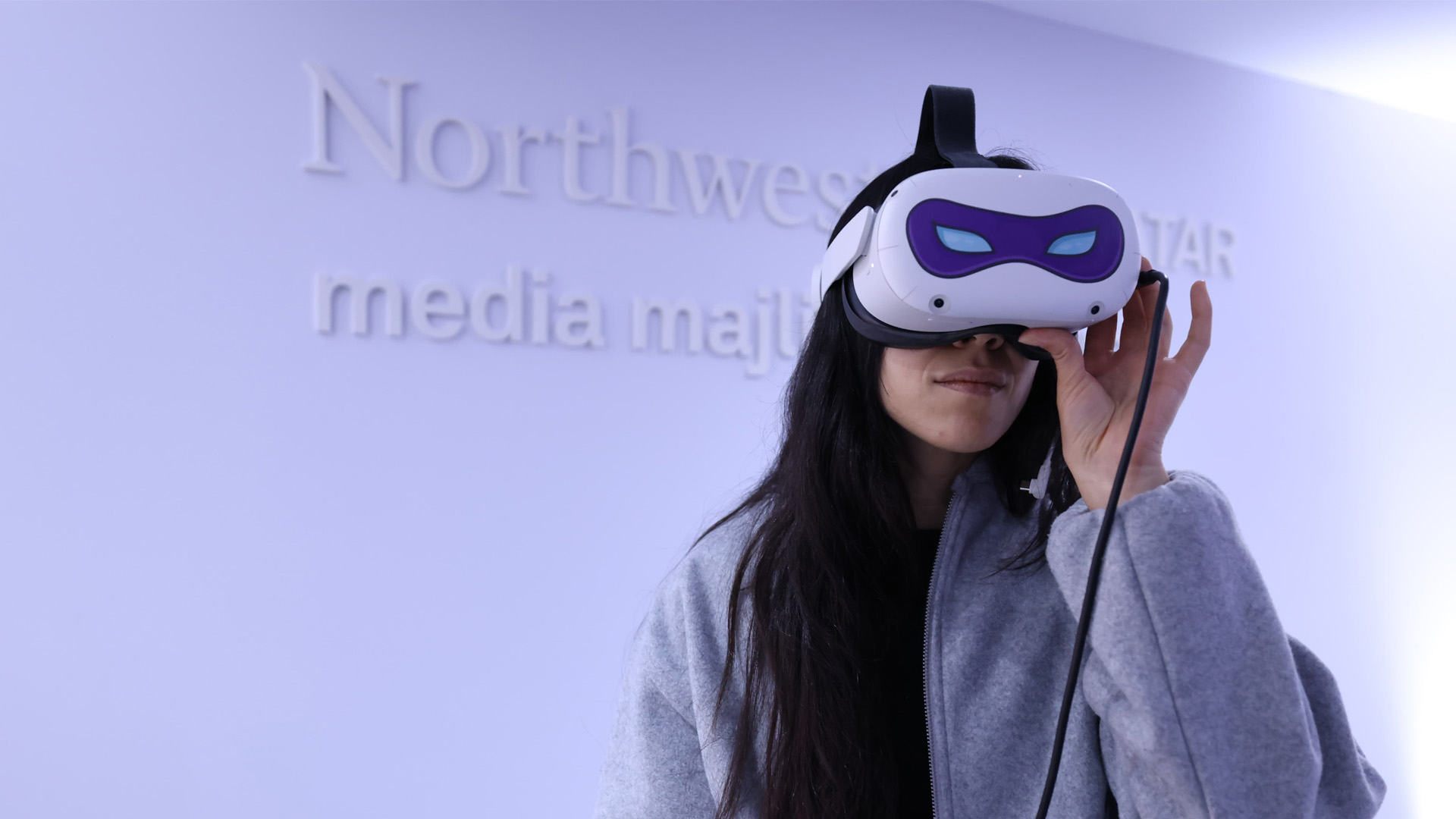
The Media Majlis Museum wrapped up its engagement at Web Summit Qatar 2026 as part of Northwestern University in Qatar’s expanded pavilion programming, engaging international audiences through an interactive exhibition examining the evolving relationship between media, technology, and storytelling.
The Museum was part of Northwestern Qatar’s broader engagement at the Summit, which this year featured an expanded pavilion and a comprehensive program of presentations, live podcast sessions, and interactive experiences.
Over the course of the Summit, the University delivered 57 sessions, including 29 presentations and 28 live podcast recordings. The program brought together 55 contributors, including 35 speakers and 29 podcasters, representing faculty, researchers, students, and collaborators from across the University’s academic and research initiatives.
“Platforms like Web Summit Qatar give us a valuable opportunity to showcase how our research, teaching, and creative work come together around the questions shaping media, technology, and communication today,” said Marwan M. Kraidy, dean and CEO of Northwestern University in Qatar. “Through the Media Majlis Museum, in particular, we were able to turn research and curatorial practice into experiences people can step into, engage with, and reflect on, while opening space for meaningful conversations with industry leaders, policymakers, creatives, and innovators, and highlighting the work of our faculty and students.”
The Museum was part of Northwestern Qatar’s broader engagement at the Summit, which this year featured an expanded pavilion and a comprehensive program of presentations, live podcast sessions, and interactive experiences.
Over the course of the Summit, the University delivered 57 sessions, including 29 presentations and 28 live podcast recordings. The program brought together 55 contributors, including 35 speakers and 29 podcasters, representing faculty, researchers, students, and collaborators from across the University’s academic and research initiatives.
“Platforms like Web Summit Qatar give us a valuable opportunity to showcase how our research, teaching, and creative work come together around the questions shaping media, technology, and communication today,” said Marwan M. Kraidy, dean and CEO of Northwestern University in Qatar. “Through the Media Majlis Museum, in particular, we were able to turn research and curatorial practice into experiences people can step into, engage with, and reflect on, while opening space for meaningful conversations with industry leaders, policymakers, creatives, and innovators, and highlighting the work of our faculty and students.”
As part of its programming, the Media Majlis Museum presented “Media Futures: Memes, Machines & New Realities,” a three-zone interactive exhibition that examines how digital culture, artificial intelligence, and emerging media practices are reshaping contemporary society.
The Meme Zone explored the circulation and impact of viral culture through a curated selection of global memes. Meanwhile, the Machine Zone presented 20 real-world case studies demonstrating how artificial intelligence and machine learning are influencing journalism, authorship, and information ethics, prompting consideration of issues related to accountability, authorship, and trust. The New Realities Zone featured the immersive virtual reality film Remember “This Place: 31°20′46″N 34°46′46″E,” which engaged audiences with narratives of memory, displacement, and belonging.
In addition to the exhibition, the Museum hosted a series of micro-workshops and short-format learning sessions at the pavilion. These sessions addressed topics including media literacy, public storytelling, AI ethics, and digital creation. This includes “Media Futures: Meme, Machine & New Realities” by Alfredo Cramerotti, Director, Media Majlis Museum; “Designing the in-between” by Sjoerd Mol, Designer, Superposition; and “Interpretation Plan to immersive world” by Farouk Essalhi, Digital Multimedia Specialist, Media Majlis Museum.
The Museum also contributed to Northwestern Qatar’s Podcast Studio programming, hosting four episodes. These included conversations led by Cramerotti on Gulf Futurism with Amal Zeyad Ali, Assistant Curator, Media Majlis Museum; Digital and Film Culture in the Public Realm with Daniela Ariado, Curator, Founder of Screen City Biennial and Art Republic Platform; and Media and Art Ecosystems in the Gulf with Auronda Scalera, Curator, Lecturer, Researcher, art & technology. In a fourth episode, Jack Thomas Taylor, Curator of Art, Media & technology, Media Majlis Museum, hosted Merve Tabur, Lecturer, University of Utrecht, in a discussion titled Curating as Knowledge.
Reflecting on the museum’s participation, Cramerotti said, “Web Summit Qatar offers a vital platform to reflect on how media, technology, and culture are evolving together,” adding that, “Our participation brings research, curatorial practice, and immersive storytelling into direct conversation with global audiences.”
Through its participation in Web Summit Qatar 2026, the Media Majlis Museum contributed to Northwestern University in Qatar’s broader efforts to engage directly with industry leaders, policymakers, creatives, and innovators, while showcasing work by our faculty and students.
The Meme Zone explored the circulation and impact of viral culture through a curated selection of global memes. Meanwhile, the Machine Zone presented 20 real-world case studies demonstrating how artificial intelligence and machine learning are influencing journalism, authorship, and information ethics, prompting consideration of issues related to accountability, authorship, and trust. The New Realities Zone featured the immersive virtual reality film Remember “This Place: 31°20′46″N 34°46′46″E,” which engaged audiences with narratives of memory, displacement, and belonging.
In addition to the exhibition, the Museum hosted a series of micro-workshops and short-format learning sessions at the pavilion. These sessions addressed topics including media literacy, public storytelling, AI ethics, and digital creation. This includes “Media Futures: Meme, Machine & New Realities” by Alfredo Cramerotti, Director, Media Majlis Museum; “Designing the in-between” by Sjoerd Mol, Designer, Superposition; and “Interpretation Plan to immersive world” by Farouk Essalhi, Digital Multimedia Specialist, Media Majlis Museum.
The Museum also contributed to Northwestern Qatar’s Podcast Studio programming, hosting four episodes. These included conversations led by Cramerotti on Gulf Futurism with Amal Zeyad Ali, Assistant Curator, Media Majlis Museum; Digital and Film Culture in the Public Realm with Daniela Ariado, Curator, Founder of Screen City Biennial and Art Republic Platform; and Media and Art Ecosystems in the Gulf with Auronda Scalera, Curator, Lecturer, Researcher, art & technology. In a fourth episode, Jack Thomas Taylor, Curator of Art, Media & technology, Media Majlis Museum, hosted Merve Tabur, Lecturer, University of Utrecht, in a discussion titled Curating as Knowledge.
Reflecting on the museum’s participation, Cramerotti said, “Web Summit Qatar offers a vital platform to reflect on how media, technology, and culture are evolving together,” adding that, “Our participation brings research, curatorial practice, and immersive storytelling into direct conversation with global audiences.”
Through its participation in Web Summit Qatar 2026, the Media Majlis Museum contributed to Northwestern University in Qatar’s broader efforts to engage directly with industry leaders, policymakers, creatives, and innovators, while showcasing work by our faculty and students.


